For me, AI is an amplifier for human creativity and human creation. It's a way for us to create more valuable stuff for the world. Or, I should say, create what we want to create for the first time, maybe.
Side Project
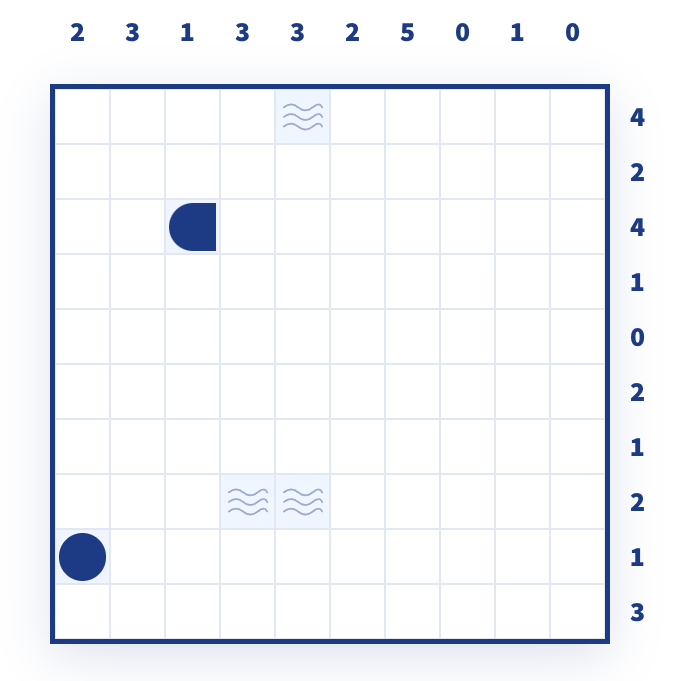
In the last three days, I've been working on a game - a web game. When I was a child, a teenager, I used to play a lot. I would wait for the weekend newspaper magazine, and in their last pages, they had a puzzle: a battleship puzzle. I loved playing it, but I had to wait the entire week to get it.
When I was 18, I started learning to code in Python. I remember coming back home on weekends, not seeing my friends for a month, because I worked on an implementation of software to create more of this game. I wrote the implementation myself - this was way before any AI or anything like that. I didn't know any web coding, just Python.
What I created was software that outputs an actual JPEG of the puzzle so I could play with it. I would print it and solve it. The problem? I had to print a thousand puzzles because some were unplayable. My algorithmic and mathematics capabilities were good enough to create the software and print those JPEGs, but not quite good enough to ensure every puzzle was unique or verify that each puzzle was solvable. Over there, I didn't have enough knowledge.
That was almost ten years ago. I've been working on a lecture about cloud code and similar topics (you can read my other blog post about this). But I want to say that I reached a point where I ran out of things I wanted to build because I'd built all the things. So I'm coming back to old ideas.
And this was an old idea. Definitely an old idea that now is fantastic. Really.
For three days, I did nothing except write code with AI and make this web app. This was a journey. It wasn't easy to make the puzzle function - not just the user experience and playability of the game, but also the visual design. I wanted it to look good, to look just like it used to look in the old newspaper I used to solve. And then there was the game engine: how to create the best puzzle.
It was fantastic. I really enjoyed it.
Why This Matters
The reason I'm telling you this story is, first, you can try it. Here's the link to the game. You can try it, play along. Feel free to contact me about any bugs or anything you find, or maybe any ideas you have.
But the real reason I'm telling you this story is because I would never have had the capacity, capability, knowledge, or expertise to create this thing that I wanted to create. And I know others are going to enjoy it - my father is already solving puzzles in my software. I had no ability to make it by myself.
And now I do.
Now I do because I have a tool I can talk to. I can talk to my computer, and the computer knows the computer language and can implement what I said in computer languages. Which is such a blessing.
I see this pattern everywhere: in music, in graphic design, in applications, in data analysis, in content creation. AI allows us to amplify our creations.
If you don't use it that much, maybe you could use it more in things that matter to you.
The Question of Quality and Intention
Final thought about this: What's going to happen with all those creations? I'm not sure.
But I know that if your intention is 100% focused and you're committed to having the best output possible, it doesn't matter if AI helped you or not.
If you just let the AI run and don't edit anything, don't put a lot of effort and intention into it, it will look like AI slop. But if you're really creating something and you use AI to amplify your creation capabilities - if you're genuinely creating something - I think it will be meaningful and enjoyable in every way.
Take birthday wishes, for example. If you tell AI "just write me a birthday wish," people most likely won't appreciate it. But if you work with AI on the birthday wish, if you really put your effort into perfecting it, edit it, and then send it - I'm sure the person who reads it will like it.
Not because of the AI, but because of your intention.